Moving to Spain: A Practical Guide from Visa Choice to Arrival
A practical guide to moving to Spain — how to choose the right visa route, which documents you will likely need, how to prepare your move in the right order, and what to do after you arrive.
Moving to Spain can be exciting, life-changing, and deeply rewarding — but it usually goes best when you plan the move in the right order. The first layer is your legal route: the visa, residence path, or registration process that fits your situation. The second layer is your document preparation: making sure the records you need are complete, properly apostilled or legalised where required, and officially translated into Spanish when needed.
Spanish consular guidance consistently states that foreign public documents generally need legalisation or an apostille to be valid in Spain and, where applicable, must be submitted with an official translation into Spanish. For documents used in Spain, consular guidance also points applicants to sworn translator-interpreters duly registered in Spain.
That is why it helps to think about your move as both an immigration process and an administrative one. The smoother moves are usually the ones where people choose the right route early, prepare their paperwork in the right order, and do not leave translations, apostilles, or post-arrival admin until the last minute.
Is Spain Right for You?
Spain is often a strong fit for people who want a better quality of life, a more social rhythm, good healthcare, and easier access to leisure, culture, and travel. In InterNations’ 2025 survey, Spain ranked 1st for quality of life, and 84% of expats said they were happy with life there. Expats rated Spain especially well for weather, culture and nightlife, recreational opportunities, healthcare, and ease of getting around on foot or by bike.
At the same time, Spain is not always the easiest place for people who need fast bureaucracy, effortless housing, or strong local career progression without a clear plan. The same 2025 survey found that Spain performs much better on lifestyle than on working abroad, and administration remains a common pain point for newcomers.
A helpful question at the beginning is not just “Do I want to move to Spain?” but “What exactly will I be doing there, and which legal route matches that plan?” The answer affects where you apply, whether you can work, which documents you will need, whether health insurance is required, and what you must do once you arrive.
Common Pros and Cons People Mention About Moving to Spain
Common pros
- Quality of life. Spain ranks extremely well for overall quality of life, healthcare, weather, leisure, and daily enjoyment.
- Healthcare. Expats rate healthcare in Spain highly for affordability, availability, and quality.
- Lifestyle. Many people move for a slower pace, stronger social life, and a more enjoyable day-to-day rhythm.
- Walkability and public life. Spain scores well for getting around, public transport, and everyday liveability.
- Family life and retirement appeal. Spain attracts both families and retirees looking for comfort, safety, and a better overall lifestyle.
Common cons
- Bureaucracy. Administrative processes can be slower and more frustrating than many newcomers expect.
- Housing pressure. Housing can be one of the hardest parts of the move, especially in the most in-demand areas.
- Career limitations. Spain tends to attract people for lifestyle more than for local job-market strength in some sectors.
- Language barriers. Life generally becomes much easier once you can handle everyday admin and communication in Spanish.
Which Visa or Route May Fit You?
EU, EEA, or Swiss citizen
If you are an EU, EEA, or Swiss citizen, you generally do not need a visa to enter Spain. For stays of less than three months, you generally just need a valid passport or identity document. If you will remain in Spain for more than three months, you must register your residence within three months of entry. You also need to be registered with your municipal council on the padrón in order to apply for residence.
Non-EU family member of an EU citizen
If you are joining an EU citizen, you may not be looking at a standard visa category. Non-EU family members accompanying or joining an EU citizen and staying more than three months must apply in person for a residence card of a family member of a citizen of the European Union within three months of entry.
Digital nomad or remote worker
If you plan to live in Spain while working remotely for a company or clients outside Spain, the telework or digital nomad route is often the relevant one. Official consular guidance describes it as a visa or permit for foreigners who travel to Spain to carry out remote work or professional activity for companies located outside Spain. Foreigners who are legally in Spain can also apply directly in Spain for a telework residence permit without first obtaining a telework visa abroad. Read the Digital Nomad Visa Guide →
Non-Lucrative Visa
If you want to live in Spain without carrying out gainful work or professional activity, the Non-Lucrative Visa is often the relevant route. Official consular guidance is explicit that this visa does not allow any type of work or professional activity, including remote online work. Read the Non-Lucrative Visa Guide →
Student visa
If you are moving for studies, training, internships, volunteering, or a qualifying educational programme lasting more than 90 days, the student visa is often the correct route. Students staying more than six months must apply for a TIE within one month of entering Spain. Read the Student Visa Guide →
Employee work visa
If a Spanish employer is hiring you directly, you are generally looking at an employee work visa. Official guidance describes this as the visa for people who wish to work as employees in Spain with a work contract.
Self-employed work visa
If your activity will be based in Spain as a self-employed person — rather than only serving foreign employers remotely — the relevant route is usually the self-employed work visa.
Family reunification
If you are moving to join a family member who is already legally resident in Spain, family reunification may be the right path. Official consular guidance describes this route as the visa for family members of foreigners who already have legal resident status in Spain and wish to exercise the right to family reunification.
Documents That Commonly Need Sworn Translation
No matter which route you take, the same categories of documents come up again and again in Spain-related procedures. Spanish consular guidance repeatedly states that foreign documents must be legalised or apostilled and, where applicable, submitted with an official translation into Spanish.
Criminal record certificates
Criminal record certificates are among the most common documents in Spain visa and residence procedures. Depending on your country, that may mean an FBI background check, an ACRO certificate, or another police or criminal clearance document. Official consular pages for multiple visa categories specifically call for criminal record certificates and official translation into Spanish where applicable.
Apostilles
Apostilles are easy to overlook, but they matter. Spanish consular guidance states that foreign public documents generally must be legalised or apostilled to be valid in Spain. One official consular document also explicitly notes that the translation should cover the complete document, including the apostille. See apostille translation service →
Financial documents
Financial proof is common across many routes — bank statements, pension letters, proof of savings, or proof of income. Official visa guidance for multiple categories requires proof of financial means, and foreign documents must be translated into Spanish where applicable.
Medical certificates
Medical certificates commonly appear in student and residence applications and often need to be presented in Spanish or with an official sworn translation.
Civil documents
Birth certificates, marriage certificates, divorce decrees, and other civil-status records are often needed for family applications, nationality matters, pareja de hecho procedures, and dependent applications. Official guidance repeatedly lists relationship documents and civil registry documents among required supporting evidence. Related services: birth certificates, marriage certificates, divorce decrees.
Academic records
Transcripts, diplomas, enrolment letters, and related academic records are common for student visas and for later recognition procedures in Spain. Spain has official procedures for homologación and equivalencia of foreign qualifications.
Step by Step: How to Prepare Your Move
Choose your legal route first
Do not start with flights or long-term housing. Start by deciding whether you are moving as an EU citizen, remote worker, non-working resident, student, employee, self-employed applicant, or family member. That decision determines everything else.
Confirm where you must apply
Many national visa routes are handled by the Spanish consulate that has jurisdiction over your place of residence. Official consular pages repeatedly state that the consular office accepts applications from people residing in that consular district and often ask for proof of residence in the district.
Start the slow documents early
The documents that usually create delays are criminal record certificates, apostilles, medical certificates, and official translations. It is much easier to manage a move when these are started early rather than squeezed into the last few weeks before an appointment.
Build your document pack carefully
Most applicants will need some version of a valid passport, official application forms, proof of residence in the consular district, financial documentation, insurance evidence, and route-specific supporting records. Work from the exact checklist for your visa type and your consulate, because requirements and presentation details can vary by post.
Plan the real relocation, not just the visa
The move itself has its own budget and timeline — flights, temporary accommodation, rent deposit, first month’s rent, local transport, phone setup, banking, healthcare, and a cushion for delays. Spain tends to reward people who prepare early and leave margin in both time and money.
Treat housing as a separate project
Housing decisions affect far more than comfort. Your address can shape how easily you handle local registration, appointments, banking, and other administrative steps. Spain’s official guidance ties residence procedures to municipal registration on the padrón, so think ahead about whether your housing situation will support that process.
Know the post-arrival admin sequence before you land
For most people, the first weeks in Spain involve settling at an address, registering on the padrón where required, applying for a TIE or residence certificate, sorting healthcare, and reviewing tax exposure. Knowing that order in advance makes the move much easier.
What to Do Once You Arrive in Spain
Empadronamiento / Padrón
The padrón is the municipal register, and Spain’s official guidance says you need to be registered with your municipal council in order to apply for residence. This is one of the most important early local steps — do it as soon as possible after arrival.
TIE or Residence Registration
EU citizens staying longer than three months must register their residence within three months of entry. Students staying more than six months must apply for a TIE within one month of entering Spain. Non-Lucrative Visa holders are also directed to apply for a TIE within one month of entry. General TIE guidance says foreign citizens must apply for the TIE within one month of entry into Spain.
Understand the Difference Between NIE and TIE
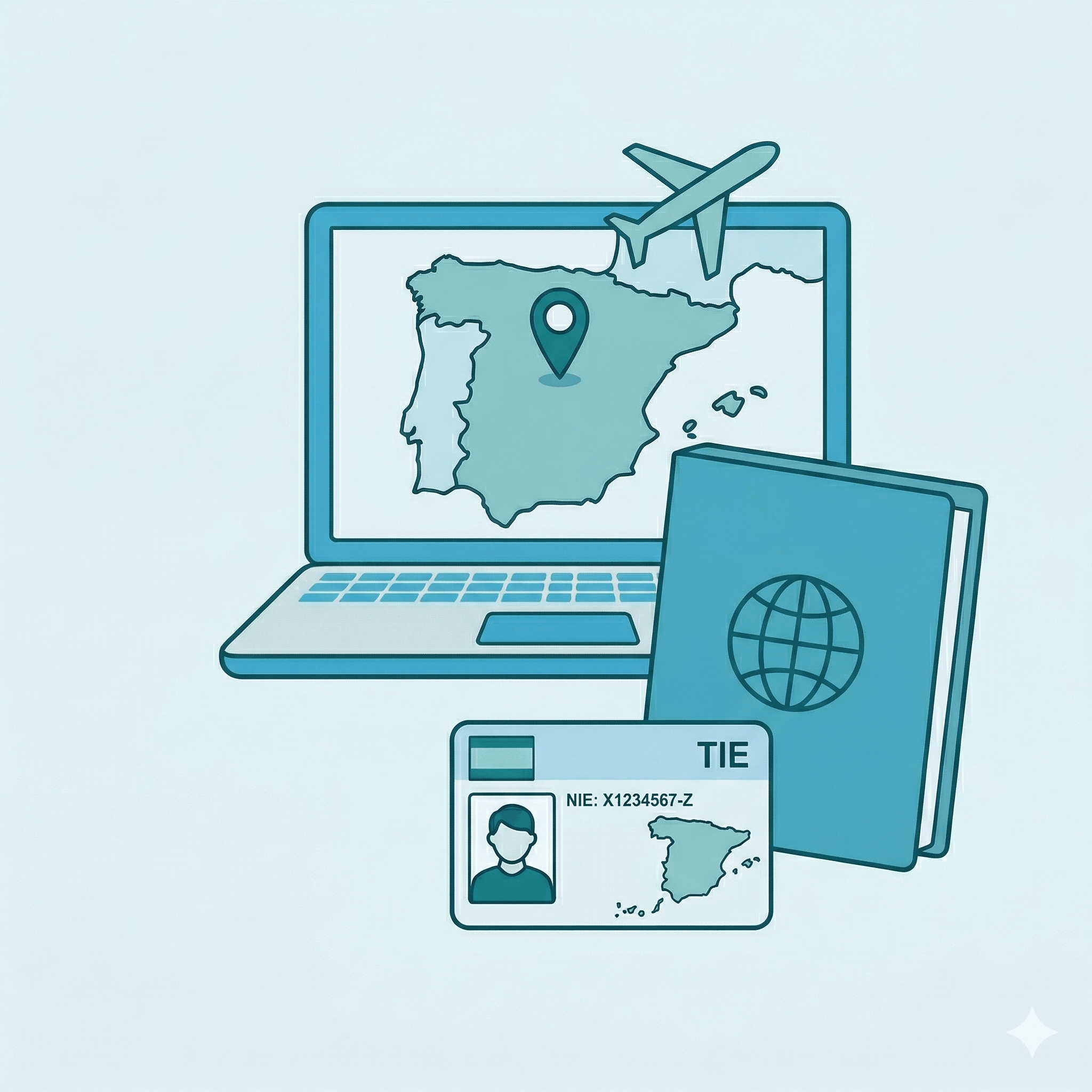
These are related, but they are not the same thing. The NIE is your foreigner identification number. The TIE is the physical foreigner identity card. Understanding the distinction early helps avoid confusion when opening bank accounts, attending appointments, or reading visa instructions.
Banking
Many newcomers open a Spanish bank account shortly after arrival. The exact requirements vary by bank, but your identification documents and local administrative status often matter. This is one reason why handling the padrón and your NIE/TIE steps promptly can make the rest of the setup process smoother.
Healthcare
Healthcare access depends on your route and status. Official residence guidance for EU citizens says that people who are not working may need to show public or private health insurance and sufficient resources. Many visa routes also include insurance requirements as part of the application itself.
Tax Position
Spain’s official tax guidance says that tax residents in Spain are taxed on worldwide income and that one major test for tax residence is spending more than 183 days in Spain during the same calendar year. This is one of the most important things to understand before or soon after you move.
Driving
If you plan to drive, check your licence situation early. Spain’s official guidance explains the rules on validity and exchange of EU driving licences and sets out residence-related requirements for exchange procedures.
Bringing a Pet
If you are bringing a pet from a non-EU country into the EU, EU guidance says you generally need an EU animal health certificate issued by an official state vet no more than 10 days before arrival, along with the required vaccination and identification documentation.
Nationality and Civil-Status Procedures
For some people, moving to Spain is also part of a longer process involving Spanish nationality, marriage-based procedures, pareja de hecho registration, or other civil-status matters. Family-based residence procedures routinely require civil registry evidence such as birth and marriage certificates. Related services: Spanish Nationality Translations · Pareja de Hecho Translations. See also: Spanish Nationality Guide →
Academic Recognition
If you plan to work in a regulated profession in Spain, continue formal studies, or have a foreign qualification officially recognised, you may need a homologación or equivalencia procedure. Homologación applies to foreign degrees being matched to official Spanish degrees that give access to regulated professions, while equivalencia gives foreign qualifications academic equivalence in Spain without automatically conferring professional validity. Related services: Homologación Translations · Equivalencia Translations
Common Mistakes to Avoid
- Leaving translations too late. Foreign documents often need to be apostilled or legalised and officially translated into Spanish, and this takes coordination. Start early.
- Forgetting that the apostille may need translation too. Official consular material specifically notes that the translation may need to cover the complete document, including the apostille. See the apostille guide.
- Using the wrong kind of translator. For documents to be used in Spain, Spanish consular guidance points applicants to sworn translator-interpreters duly registered in Spain. A regular certified translation from another country is not the same thing.
- Assuming every Spanish consulate handles everything exactly the same way. The legal framework may be national, but consular checklists, appointment systems, and presentation details can vary by post.
- Delaying empadronamiento after arrival. Official guidance links municipal registration to residence procedures. Do not leave it until you need it — do it as soon as you have a stable address.
Need sworn translations for Spain? If your move involves criminal record certificates, apostilles, financial documents, medical certificates, birth or marriage certificates, diplomas, transcripts, or other supporting records, it helps to get the translation side organised early. Work directly with Alba Fernández Carrasco for official sworn translations with fixed per-page pricing and fast turnaround. Start your request →
Frequently Asked Questions
Do I need a visa to move to Spain?
If you are an EU, EEA, or Swiss citizen, you generally do not need a visa, though longer stays require registration. If you are a third-country national, you usually need a national visa or residence route that matches the reason for your move.
Can I work remotely on a Non-Lucrative Visa?
No. Official consular guidance says the Non-Lucrative Visa does not allow any type of work or professional activity, including remote online work. If you plan to work remotely from Spain, the Digital Nomad Visa route is generally the relevant one.
Can I apply for the digital nomad route from inside Spain?
In many cases, yes. Official consular pages state that foreigners who are legally in Spain can apply directly in Spain for a telework residence permit without first obtaining a telework visa abroad.
What is padrón, and do I need it?
The padrón is the municipal register. Spain’s official guidance says you need to be registered with your municipal council in order to apply for residence. It is one of the first and most important administrative steps after arrival.
What is the difference between NIE and TIE?
The NIE is your identification number as a foreign national. The TIE is the physical identity card. They are connected, but they are not the same thing. Official consular guidance explicitly notes this distinction.
What documents usually need sworn translation for Spain?
Common examples include criminal record certificates, apostilles, medical certificates, financial documents, civil certificates such as birth or marriage records, and academic records such as diplomas and transcripts. Spanish consular guidance repeatedly states that foreign public documents must be apostilled or legalised and, where applicable, submitted with an official translation into Spanish.
Does the apostille need to be translated too?
Often, yes. Official consular material indicates that the translation may need to cover the complete document, including the apostille. If in doubt, it is usually safer to include the apostille in the sworn translation. See the dedicated apostille guide.
Can I use a regular translator or a certified translator from my own country?
For documents to be used in Spain, Spanish consular guidance points applicants to sworn translator-interpreters duly registered in Spain. A regular certified translation from another country is not equivalent to a Spanish Traducción Jurada.
Do all Spanish consulates ask for exactly the same documents?
Not necessarily. The underlying legal route may be the same, but consular instructions, appointment systems, and presentation details can vary, so it is important to check the specific consulate that has jurisdiction over your residence.
Do I still need documents after my visa is approved?
Usually yes. After arrival, people often still need documents for empadronamiento, TIE appointments, banking, healthcare, family procedures, tax matters, and other administrative steps.
Will I become a tax resident in Spain automatically?
Not automatically, but it can happen more quickly than many people expect. One major official test is spending more than 183 days in Spain during the calendar year, and Spanish tax residents are generally taxed on worldwide income.
What if I plan to apply for nationality, pareja de hecho, homologación, or equivalencia later?
It is smart to think about those procedures early, because they often require civil or academic documents that may need official copies, apostilles, and sworn translations. Related guides: Spanish Nationality · Related services: Pareja de Hecho, Homologación, Equivalencia.
What are the first things I should do after arriving?
For most people: settle at your address, register on the padrón if required, complete your residence registration or TIE step, sort healthcare, and review your tax position early. Those are the steps that most often affect everything else.
Can I bring my pet?
Usually yes, but you need to prepare the paperwork properly. For pets entering the EU from a non-EU country, EU guidance says you generally need an EU animal health certificate issued within 10 days before arrival, together with the required vaccination and identity documentation.
What is the smartest overall way to approach the move?
Choose the right legal route first, start the slow documents early, assume your foreign records may need apostilles and official translation, and leave more time and money in the plan than you think you need. Spain tends to reward preparation.